
Search anonibs and you hit fog almost instantly. No polished homepage screaming brand trust. No neat founder story. Just scattered mentions and a whole lot of people typing the same nervous questions into Google: what is Anonibs, is Anonibs legit, and is Anonibs safe? That alone tells you everything about the vibe. This isn’t a mainstream app. It’s something quieter. Private. A little uncomfortable in how little it explains itself.
From what’s publicly visible, Anonibs appears to be an anonymous platform or website built for identity-free posting, feedback, and possibly image sharing. Some people treat it like an anonibs anonymous community, others like a private feedback tool. Either way, the attraction is the same. Say things without your name attached. Clean slate. No profile baggage. Sounds freeing. Also sounds like trouble if handled carelessly.
Both things can be true.
The Meaning Behind the Name “Anonibs”
The name doesn’t try to be clever. It’s blunt in a coded way.
“Anon” points straight at anonymity. No disguise there. “Ibs” feels like a neutral ending, the kind privacy platforms use when they don’t want a name that draws attention. Put together, Anonibs sounds less like a company and more like a passageway. Enter, say your piece, disappear.
Anonymous branding works this way on purpose. Loud names invite regulation. Quiet names invite curiosity.
What Exactly Is Anonibs? Platform, Website, or Tool?
Right now, Anonibs sits in the murky middle between platform and community. It doesn’t present itself as a traditional SaaS product. There’s no feature roadmap being advertised. No business dashboard language. It behaves like a private anonymous space where users post without building a persistent digital identity.
That places it in the same family as:
-
Anonymous feedback platforms
-
Confession-style communities
-
Anonymous image boards
-
Identity-free discussion spaces
Each of those categories survives on one fragile promise. Privacy.
Break that promise and the platform doesn’t decline. It evaporates.
How Anonibs Works (Beginner-Friendly Breakdown)
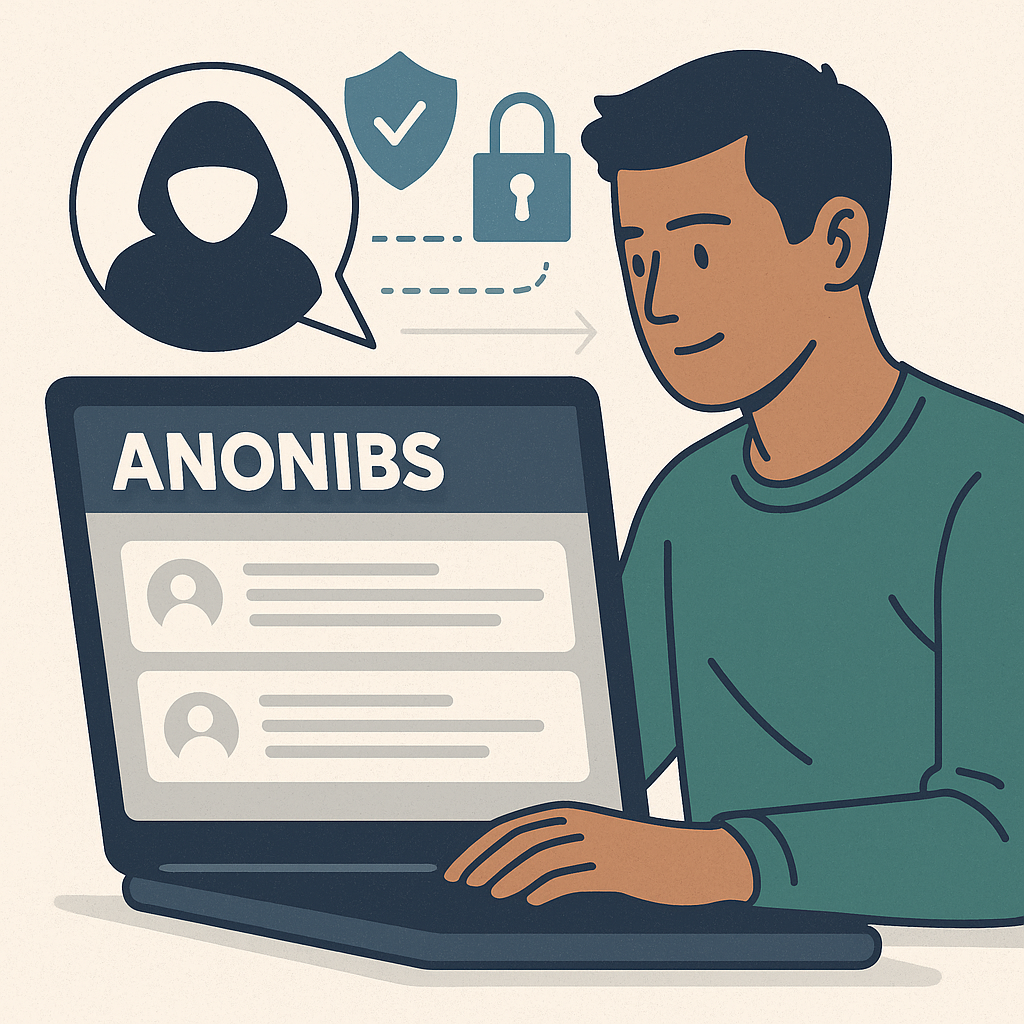
If you’re searching how Anonibs works, the logic is simple.
You access the Anonibs website or platform.
You don’t create a traditional personal profile.
You post content—text, feedback, maybe images.
Other users interact without knowing who you are.
No follower counts.
No public reputation.
No identity anchors.
Post. React. Exit.
That’s the entire loop. It feels frictionless for users. It feels terrifying for anyone thinking about accountability.
Core Features of the Anonibs Platform
Based on how anonibs anonymous platforms typically function, the core stack revolves around:
-
Anonymous posting
-
Anonymous feedback submissions
-
Private or semi-private content sharing
-
Media uploads (possibly image-based)
-
Minimal or zero profile visibility
-
Temporary content exposure
This setup is designed to remove social weight. No audience management. No personal branding. You speak and move on.
That freedom doesn’t come with guardrails by default. Those have to be built in later—or paid for in chaos.
Why People Use Anonibs (The Real Benefits)
People don’t drift into anonymity by accident. They’re pushed there emotionally or socially.
The biggest anonibs benefits usually come down to:
-
Speaking without backlash
-
Giving brutal honesty without repercussions
-
Exploring ideas without long-term digital stains
-
Venting without social consequences
-
Creating without brand pressure
For some users, Anonibs feels like oxygen. For others, it becomes a channel for behavior they’d never defend in the open.
Anonymity doesn’t create truth.
It removes fear.
What people do with that gap is unpredictable.
Real-World Use Cases of Anonibs
Different users walk into anonymity with different intentions.
Creators test ideas without risking their main identity.
Students leave anonymous reviews and confessions.
Communities collect private feedback without politics.
Vulnerable users share things they’d never publish publicly.
Bad actors exploit the lack of accountability.
Same door. Different people walking through it.
Anonymity doesn’t choose sides. It magnifies what’s already there.
Is Anonibs Really Anonymous? Privacy, Data, and Traceability
This is where searches like “is Anonibs really anonymous” and “can Anonibs be traced” come from. People know better now. They’ve watched enough leaks, screenshots, and subpoenas to understand one basic rule of the internet:
No platform gives you absolute invisibility.
Even if Anonibs hides your username, the system itself still sees:
-
IP addresses
-
Device signatures
-
Upload metadata
-
Behavioral patterns
That doesn’t mean it hands your identity to strangers. It does mean anonymity on Anonibs protects you socially, not legally. And screenshots destroy everything anyway.
Once content leaves the platform, control is gone.
Is Anonibs Legit, Safe, or a Potential Scam?
People don’t search “anonibs scam or real” without a reason. Obscure platforms automatically trigger suspicion. That’s healthy.
Signs that Anonibs is legit usually include:
-
Working privacy policies
-
Active moderation
-
Clear reporting tools
-
Platform stability
Red flags look like:
-
Zero moderation presence
-
No visible governance
-
Rapid spread of abusive content
-
No transparency on data handling
Anonymous platforms fail in one of two ways. Legal shutdown. Social collapse. Sometimes both.
Anonibs vs Other Anonymous Platforms
People rarely trust a platform in isolation. They compare.
Anonibs vs 4chan — 4chan is chaotic and culture-driven. Anonibs feels quieter, more feedback-oriented.
Anonibs vs Yik Yak — Yik Yak tied anonymity to geography. Anonibs seems broader, less location-locked.
Anonibs vs anonymous Reddit posting — Reddit still builds behavioral fingerprints. Anonibs aims for lighter traces.
Different masks. Same instinct.
Content Moderation and Community Standards
Here’s the uncomfortable truth: moderation decides whether an anonymous platform survives.
Without serious moderation:
-
Hate content multiplies
-
Harassment becomes normal
-
Good users leave
-
Regulators show up
Strong anonymity needs stronger rules. Otherwise the loudest and worst behavior always wins.
Silence doesn’t protect communities. Systems do.
Legal, Ethical, and Psychological Risks
Anonymous platforms carry layers of risk that most users underestimate.
Legal risks include:
-
Defamation claims
-
Threat investigations
-
Platform subpoenas
Psychological risks include:
-
Emotional dependency on anonymous validation
-
Harassment-induced anxiety
-
False accusations with no defense channel
Ethical risks show up when users forget that anonymity doesn’t remove responsibility. It only delays the moment consequences arrive.
Who Should Use Anonibs (And Who Should Avoid It)
Anonibs may suit:
-
Private feedback collection
-
Sensitive community discussions
-
Anonymous idea testing
-
Confession-style communication
It’s a bad match for:
-
Minors
-
Emotionally vulnerable users
-
People who overshare impulsively
-
Anyone who assumes anonymity equals immunity
Run with it like a tool.
Not like a shield.
Frequently Asked Questions About Anonibs
What is Anonibs used for?
Anonymous posting, feedback, and possibly anonymous image sharing.
Is Anonibs legit?
Legitimacy depends on moderation, transparency, and privacy handling.
Is Anonibs safe?
Social privacy exists. Absolute digital safety does not.
Can Anonibs content be traced?
Indirectly, yes—through technical and legal channels.
Is Anonibs really anonymous?
Anonymous to other users, not guaranteed anonymous to the system.
Final Verdict: Is Anonibs Worth Using or Too Risky?
Anonibs isn’t evil. It isn’t heroic. It’s a pressure-release valve.
For some, it offers freedom.
For others, it becomes a temptation.
For the platform itself, survival depends on how well it reins in what anonymity unleashes.
If you understand what anonymity actually protects—and what it doesn’t—Anonibs can be a useful anonymous platform for feedback and expression. If you believe it makes you untouchable, you’re already standing on thin ice.
Anonymity doesn’t erase consequences.
It only delays the echo.